DNR celebrates reopening of Dollar Bay to Lake Linden trail segment
By JOHN PEPIN
Deputy public information officer
Michigan Department of Natural Resources
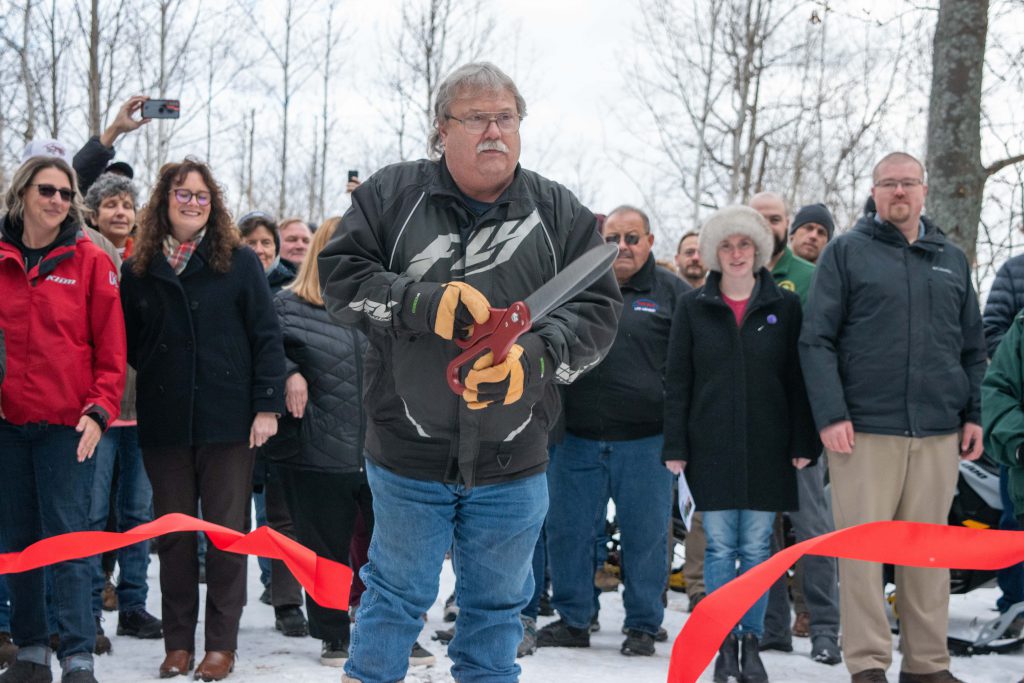
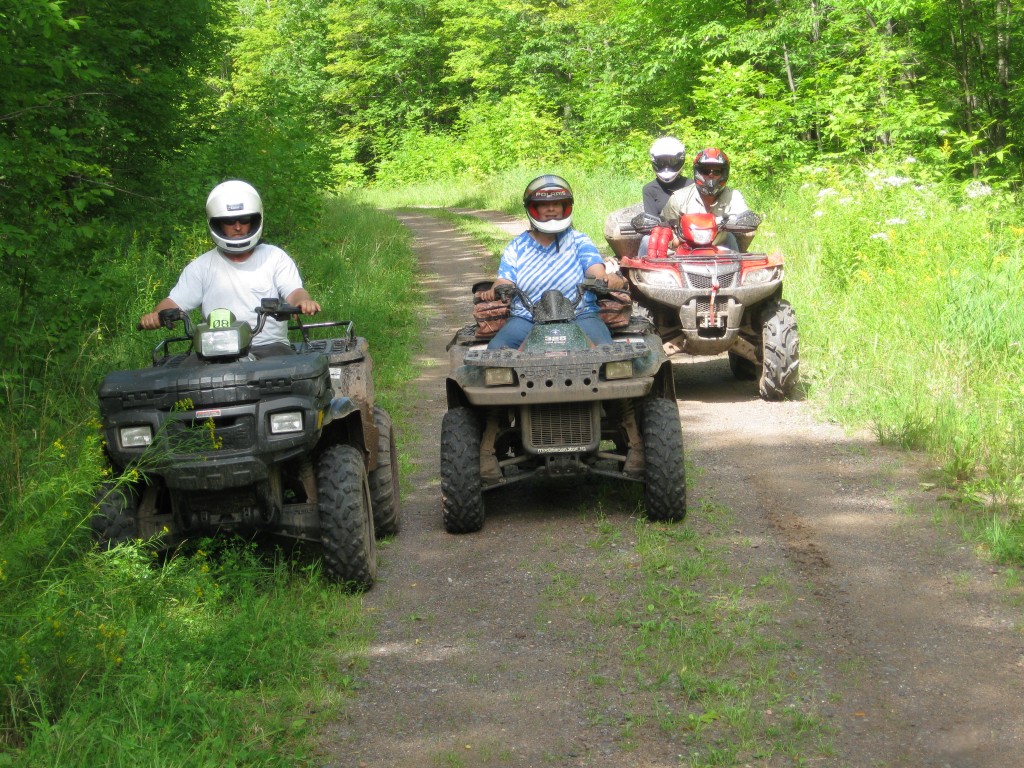
Supporters and partners joined the Michigan Department of Natural Resources today in Houghton County to celebrate the reopening of a roughly 8-mile segment of snowmobile and off-road vehicle trail devastated by a historic storm in 2018.
In what is likely the Michigan DNR’s largest trail repair project, $10.5 million was spent for work that took contributions of time, money and expertise from numerous sources and years to complete.
“The bottom line of why we do this stuff and why we spend the money and the resources and that’s to provide people with an enrichment and in the end it’s lifelong memories,” said Ron Olson, chief of the DNR’s Parks and Recreation Division. “’Cause when you ride down a trail like this, what you remember is what’s important and the experience that you have.”
Olson said the trail also provides opportunities beyond economic benefits and tourism for improved health and well-being. He said a trail outing can help reduce stress.
“You can ease yourself and you can enjoy yourself and forget about some of the problems of the day,” Olson said.
The Father’s Day flood in June 2018 dumped 7 inches of rain over the Houghton-Hancock area in the span of only a few hours.
Coupled with the steep terrain of the surrounding hills, the rain rushing downhill washed out or plugged numerous culverts and damaged or destroyed roads, homes, streets, trails and other places where the water sought its level.
Among these features was the Dollar Bay to Lake Linden segment of Trail No. 3, which was constructed from a decommissioned railroad line.
In the wake of the historic storm, repair work was needed at 171 sites along the 7.8 miles of recreation trail. Just over 100 culverts needed to be replaced and 34 major washouts needed repair.
“Some of the washouts were 80-feet deep and 240-feet across,” said Ron Yesney, Upper Peninsula trails coordinator for the DNR’s Parks and Recreation Division.
The damage to this part of the trail was so great that many feared the trail segment might never be rebuilt. But with the help and considerable efforts of several state agencies, lawmakers and other partners, the nearly $11 million project to reopen the trail has now been realized.
“Getting this project engineered and constructed was a monumental task,” Yesney said. “I’m real proud of the effort to restore this trail and I am thankful to all those who participated in the reconstruction.”
Speakers at today’s ribbon-cutting commemoration, along the trail in Dollar Bay, included Olson, Yesney and DNR U.P. Field Deputy Stacy Welling-Haughey and state 110th District Rep. Greg Markkanen, Daryl St. John of the Keweenaw ATV Club and Ryan LaPorte of the Keweenaw Snowmobile Club.
“This trail is just incredible,” Markkanen said. “I want to commend the DNR for their commitment to this project, and they finally get it done, everyone’s here today, it’s just a very emotional moment.”
Markkanen also praised the “phenomenal” work done by construction crews on the trail restoration project.
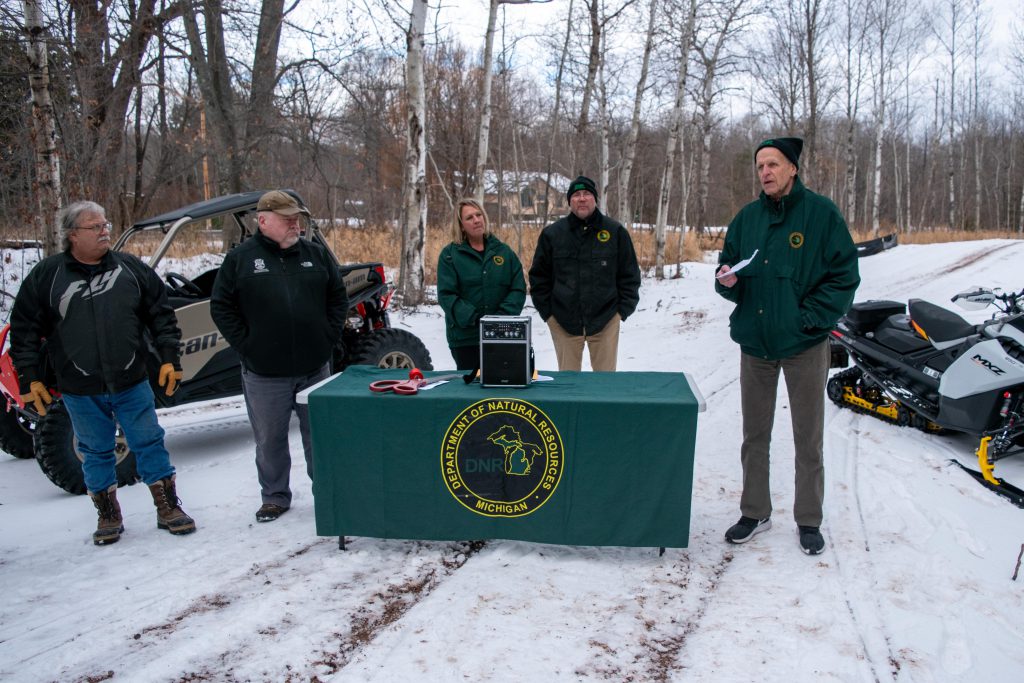
He applauded restored access to recreation opportunities going north from Dollar Bay to Lake Linden.
“It’s so important to our economy, to our local businesses, to our groups and to our communities as a whole,” Markkanen said.
Those gathered for the ceremony stood on the trail behind a red ribbon drawn tautly to be cut by St. John in celebration of the trail work’s completion.
“Everyone here had something to do with this, please come and stand here with us,” Haughey said.
About 60 people attended the event.
Funding for the $10.5 million project was derived from numerous sources, including $4 million in a state general fund appropriation allocated through the Michigan Economic Development Corp., $2 million from the federal American Rescue Plan Act of 2021, $2.1 million from state ORV funds compiled from fiscal years beginning in 2018, $1.5 million in federal Land and Water Conservation Fund granting and $.5 million in snowmobile program money.
DNR partners on the project included the Michigan Department of Environment, Great Lakes, and Energy, the Michigan Department of Transportation, Michigan Department of Technology, Management and Budget, B&B Contracting, DP Construction, Bacco Construction Co., MD Contracting, Blue Line Sit Solutions and OHM Advisors.
Find out more about Michigan’s thousands of miles of recreational trails.
Check out previous Showcasing the DNR stories in our archive at Michigan.gov/DNRStories. To subscribe to upcoming Showcasing articles, sign up for free email delivery at Michigan.gov/DNREmail.

 Sept. 19, 2023
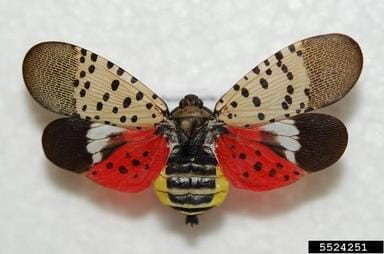
 “We’ve heard reports of spotted lanternflies swarming New York City and covering beaches on the Jersey Shore. We’d like to prevent similar scenarios in Michigan,” said Rob Miller, MDARD’s invasive species prevention and response specialist. “Everyone can help by looking for spotted lanternfly and reporting suspected sightings.”The spotted lanternfly spreads to new locations by hitchhiking or laying eggs on vehicles and equipment that have traveled through infested areas. If you are returning from out of state, it’s important to look for and destroy spotted lanternfly insects and egg masses that may be hiding on cars, trailers, firewood, camping gear or anything that’s been outside.The Michigan Invasive Species Program’s new campaign – “See it. Squish it. Report it.” – reminds Michiganders and visitors of the simple steps they can take to prevent new introductions of spotted lanternflies in the state.“If you see a spotted lanternfly, yes, we really do want you to squish it if you can. Then, take a photo or two and report it to us through the online
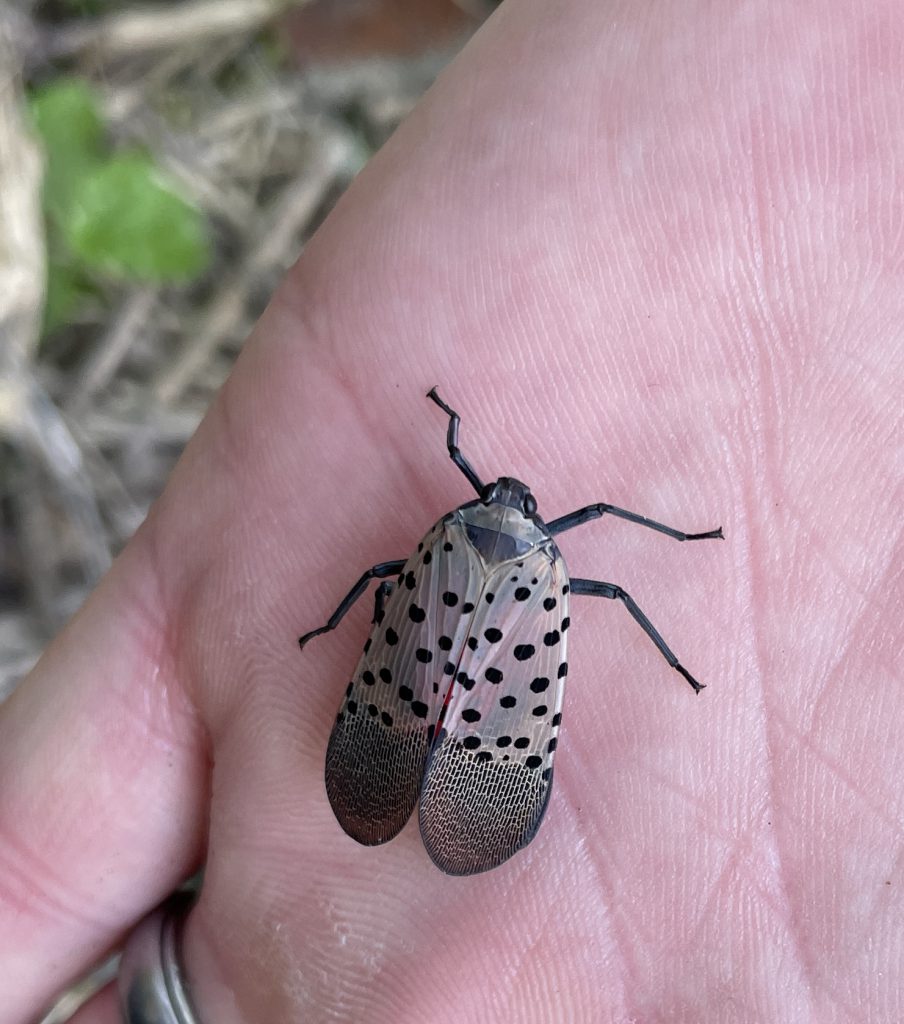
 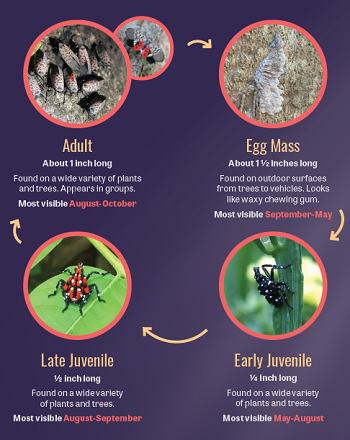 Take a few minutes to become familiar with spotted lanternfly life stages.Adults are roughly 1 inch long. Their folded wings are gray to brown with black spots. Open wings reveal a yellow and black abdomen and bright red hind wings with black spots, transitioning to black and white bands at the edge. Most visible August through October.Egg masses resemble old chewing gum, with a gray, waxy, putty-like coating. Hatched eggs appear as brownish, seed-like deposits. Most visible September through May.Nymphs are about 1/4 inch to 1/2 inch long. They are wingless and beetle-like, first appearing black with white spots and developing red patches as they mature. Most visible May through September.Be aware of look-alikesPublic reports to Eyes in the Field have helped identify some insects commonly mistaken for the spotted lanternfly.Several native moth species have red underwings, but their upper wings are striped or mottled.Some insects have spotted wings that are translucent or differ in color from spotted lanternfly adults.Common insects including boxelder bugs and red milkweed beetles have similar colors and patterns as spotted lanternfly nymphs, but their shapes are distinct.To better identify spotted lanternfly life stages and rule out look-alikes,


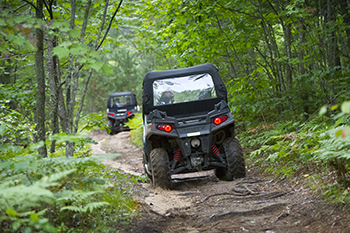
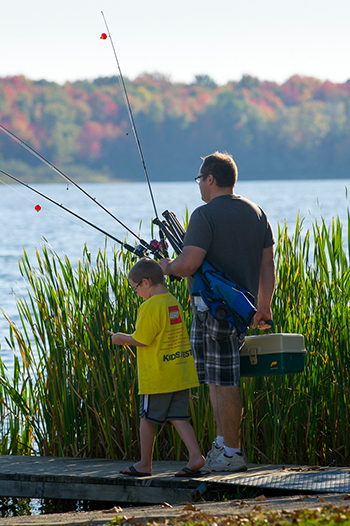 The Michigan Department of Natural Resources encourages everyone to take advantage of “Three Free” Weekend – Saturday, June 13, and Sunday, June 14. It’s two full days when Michigan residents and out-of-state visitors can grab a fishing rod, ride the off-road trails and visit state parks, boating access sites and other outdoor locations — all free of charge.“It’s that time of year when everyone gets to enjoy ‘Three Free’ Weekend and take part in some of Michigan’s best outdoor recreation opportunities,” said Acting DNR Director Shannon Lott. “Whether you’re an avid outdoors-person or someone just beginning to explore all the options, our ‘Three Free’ Weekend makes it easy to pursue a new passion, visit a new park or introduce friends and family to an outdoor experience or place you love.”
 These two days include: Free Fishing Weekend. Fish for all in-season species, all weekend long, without a license. All other fishing regulations apply. To get more details or find a local event, visit Michigan.gov/FreeFishing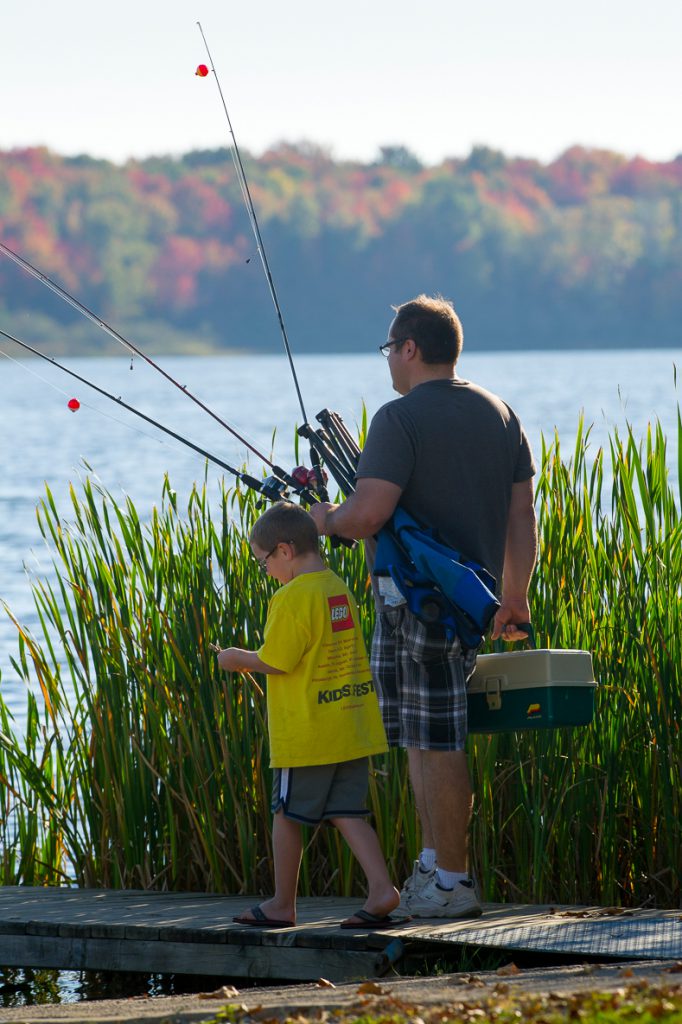
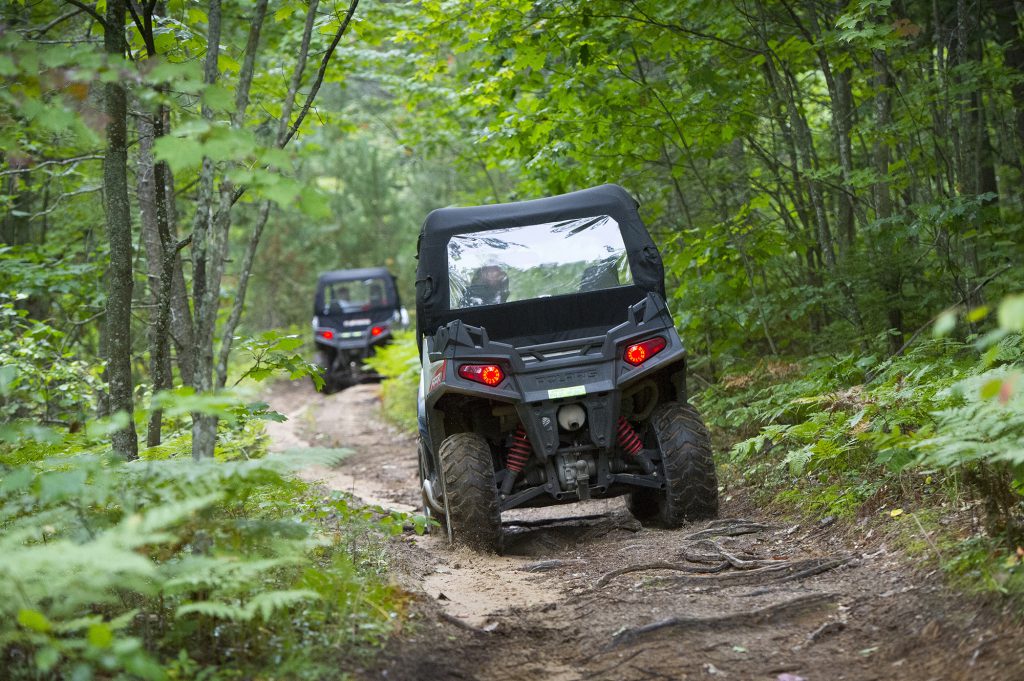
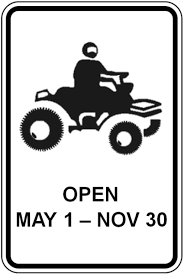
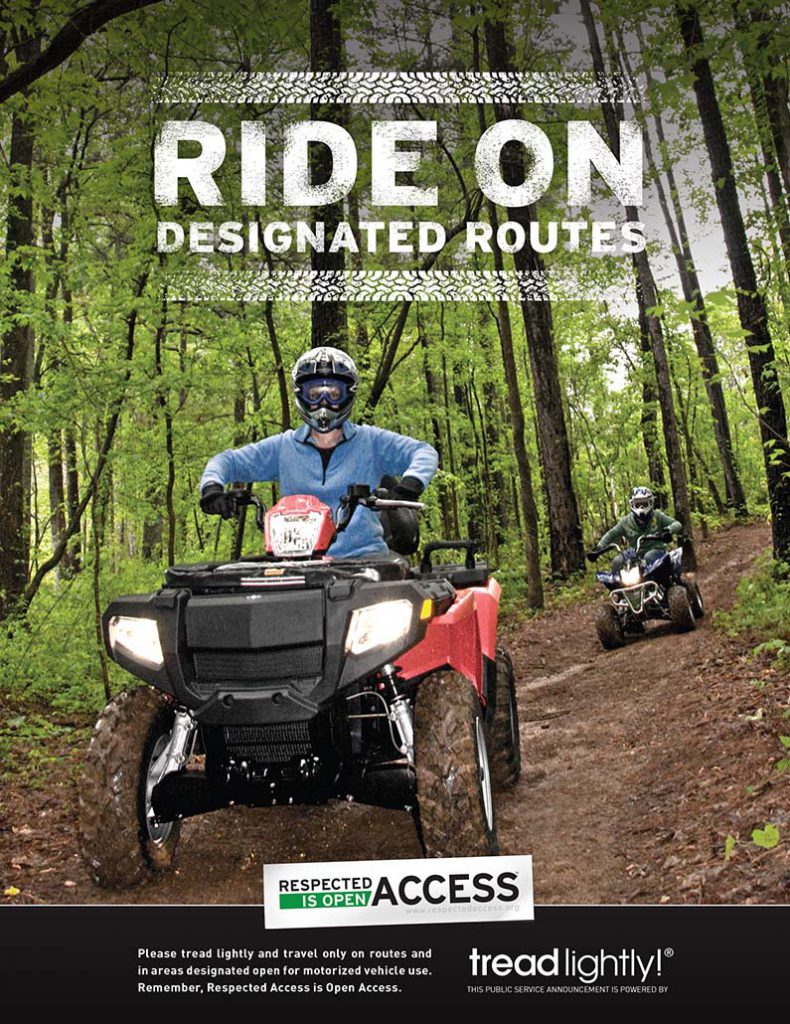
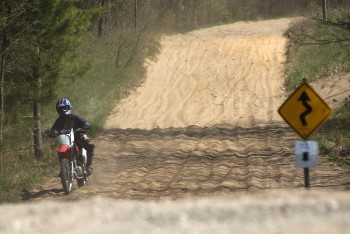 A friendly reminder to off-road vehicle operators to keep it safe while riding this holiday weekend and into the colder seasons.“Conservation officers see an increase in riders during holidays and on the weekends. Please keep the extra traffic in mind when you’re taking a turn and going over a hill,” said the DNR’s Cpl. Mike Hearn. “ORV accidents often happen when people get caught up in the moment of riding and keep increasing their speed, aren’t familiar with the terrain or their machines capabilities, or take a turn, hill or jump too fast without knowing what’s on the other side.”Speed and rider inexperience are the primary contributing factors for ORV accidents, serious injuries and death. Make sure to